

My book has generated a lot of discussion along with a little bit of controversy. Some of that controversy comes from a misreading of the Bible.
The subtitle of my book, Loser Theology, is “Why the Weak will not Inherit the Earth.” A number of people have commented online that this subtitle is a direct contradiction of scripture.
Not so fast.
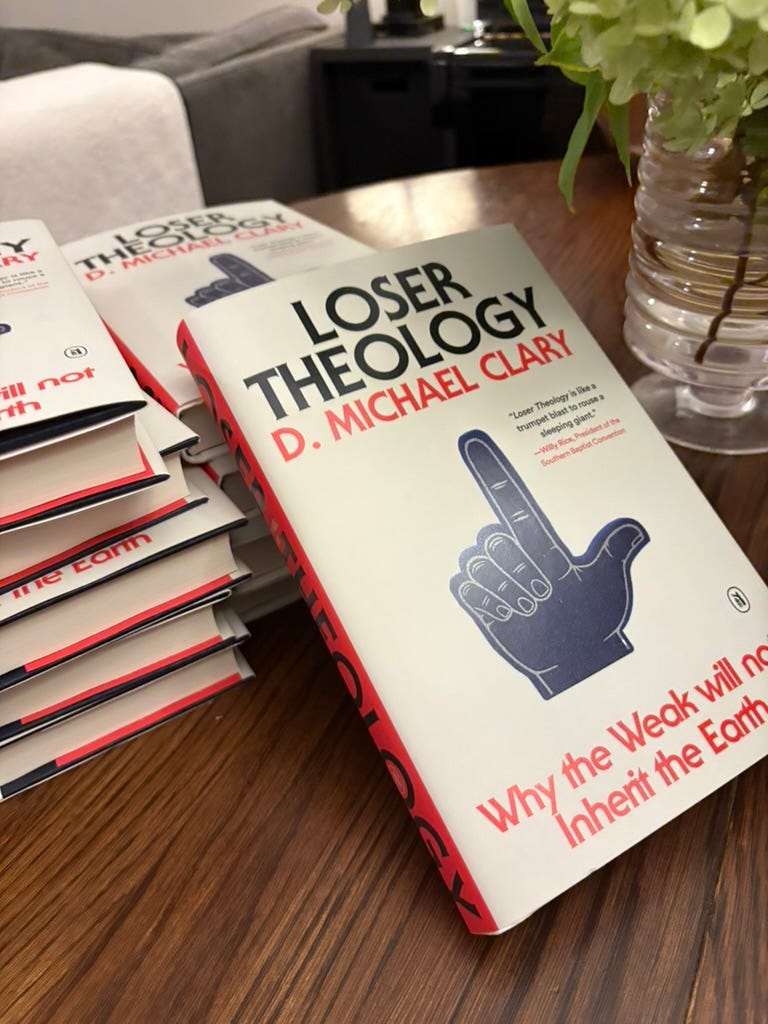
Jesus said, “Blessed are the MEEK, for they shall inherit the earth” (Matt 5:5).
Notice he didn’t say the WEAK shall inherit the earth.
Since the words rhyme, people often treat them as synonyms. They aren’t. Both came into English from Old Norse, but from different roots with different meanings.
So what’s the difference?
The Greek word for “meek” in Matthew 5:5 is praus, which was considered a virtue by ancient Greeks. Aristotle placed it as the mean between spinelessness and rage. In other words, meekness refers to strength under control. It’s the strength to act with force when needed, but restrained.
Scripture takes it further: meekness is strength restrained by humility and submission to God’s will. Think of it like a loaded weapon with the safety on.
The best example of this kind of man in the OT is Moses.
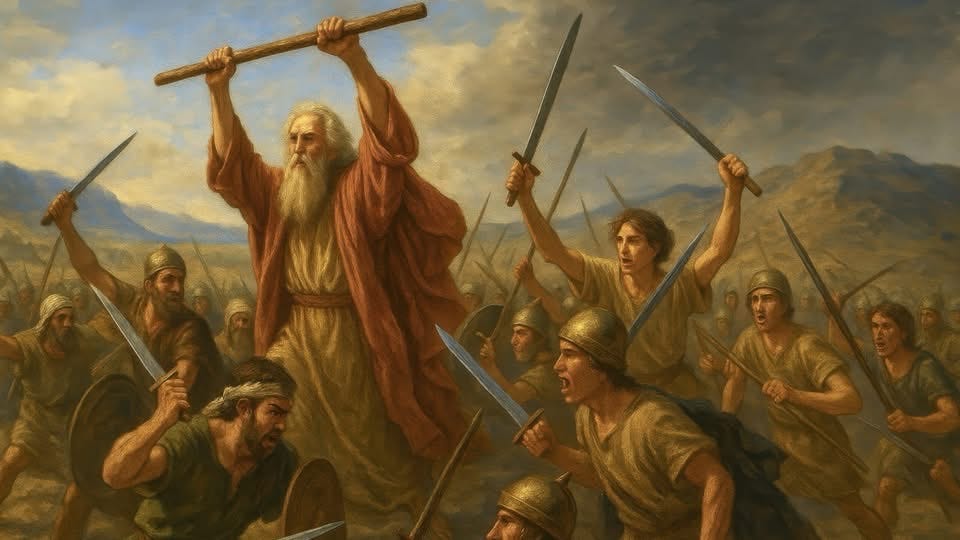
Earlier in his life, Moses failed in both directions. In Egypt, he murdered a man in a fit of rage. At the burning bush, he begged God to send someone else to Pharaoh. He was impulsive and timid, poor qualities for a leader. He needed to learn to trust God’s power, channel his strength properly, and humbly submit himself to God’s will.
Later in his life, he is called the MEEKEST man on the face of the earth (Num 12:3).
Moses began WEAK but God made him MEEK. God took a weak man, made him strong, then chastened that strength with holiness. That same trajectory of sanctification is available to anyone who seeks it by faith.
Jesus said that kind of meek man is blessed: he shall inherit the earth. When we confuse meekness with weakness, we end up treating a vice as a virtue. Scripture does not command us to be weak. Scripture commands us to be strong.
Old Testament examples:
“Be strong and courageous” (Deut 31:6)
“Be strong and very courageous” (Joshua 1:7)
“Be strong and courageous” (1 Chron 22:13)
“Be strong, and show yourself a man” (1 Kings 2:2)
New Testament examples:
“Be watchful, stand firm in the faith, act like men, be strong.” (1 Cor 16:13).
“Finally, be strong in the Lord and in the strength of his might.” (Eph 6:10)
“You then, my child, be strengthened by the grace that is in Christ Jesus.” (2 Tim 2:1)
“Therefore lift your drooping hands and strengthen your weak knees.” (Heb 12:12)
I could go on, but you get the point.
Weak men can't be meek men.
Weak men lack the strength meekness requires. As Jordan Peterson once said, “If you think tough men are dangerous, wait until you see what weak men are capable of.”
When King Hezekiah was warned by the prophet Isaiah that one day the Babylonians would plunder his house and castrate his sons to be eunuchs in the king's palace, he said “good,” because at least “There will be peace and security in my days” (Isa. 39:8).
Giving power to weak men is the last thing we need. They’ll use their power to comfort and enrich themselves while throwing the rest of us to the wolves.
Strength is the goal. Weakness is the means.
Others push back on my book by appealing to Paul’s teaching about weakness. Yes, there are times we are weak, either by nature or affliction. God may weaken us to remind us that we can do nothing apart from him and to teach us to rely more fully on his strength (John 15:5, 2 Cor 12:9).
Sometimes strength comes in ordinary ways: learning, growing, testing, and overcoming adversity. And sometimes that strength comes in extraordinary ways: God may weaken us in the flesh so we might depend more fully on the Spirit. In either case, strength is the goal, though weakness in the flesh might be God’s means of bringing it about.
That’s exactly what Paul said in 2 Cor 12:10: “For when I am weak, then I am strong.” Paul accepted weakness in his flesh as God’s providence, though he initially sought to escape it. Once it became clear that God was strengthening him through a particular affliction of weakness, he accepted it as a gift. But what Paul did not do was make weakness a prize to be won. He boasted in his weakness because it made room for Christ’s power to rest on him (2 Cor 12:9). The strength was Christ’s, but it was real strength, and that was the point.
The meek will indeed inherit the earth, as Jesus said. The strength of a meek man is a terror to the wicked. And his gentleness is a comfort to the righteous.
Loser Theology Book Updates
My book got significant attention last week, thanks to a critical review at The Gospel Coalition. Dr. Brian Tabb summarized my critique of evangelicalism’s loser theology as “weak, woke, winsome, and wimpy.” He also said that with “witty turns of phrase and bold pastoral appeals, Clary presents readers with a stark choice: Surrender or advance; be a spiritual doormat or exercise dominion.”
The TGC piece got a lot of traction online, most of it critical of TGC’s critique. My prayer in publishing this book was to generate conversation in the evangelical world about what it means to be a High-Agency Christian. In recent decades, much of the evangelical world has focused on faithful suffering and loss. That has its place. But we’ve neglected the subject of faithful stewardship of power and authority. If my book can help provoke that conversation, I’m here for it.


Unfortunately, TGC locked the comments on this post, so no one could engage with the post directly. Some people just made posts of their own about it. Here’s what a few of them said:
Joseph Spurgeon said the criticism of my book comes from “a fundamental misunderstanding of his argument.”
Josh Daws said, “Not surprising that TGC wouldn’t like the best book of the year. Read dmichaelclary’s book for yourself. Be high-agency Christians. God didn’t save us to sit by and watch the world decay while we wait to catch the train to glory.”
Matt Green said, “I'm about 85% of the way through and the book is grounded in biblical truth. He diagnoses the problem, calls out the sin in ourselves and the hypocrisy of those who push the passive ideology (the Christian ‘elites’ can win, can push forward in the culture but us rubes are not allowed to do so).”
Jacob Dixon said, “The world is getting crazier and crazier and in a culture that says that boys can become girls and that there is no meaningful distinction between the two, it is good that there are men who are calling men to more. This is the kind of discipleship that has been missing lately.”
Nate Downey said “I’m gonna buy dmichaelclary’s book just to spite TGC.”
I published my response to the TGC review the next day at American Reformer, which also generated a lot of positive traction.
It’s exciting to see the vision of this book come to fruition. Book sales are always nice, but the broader conversation is even better.
In fact, I know of at least three churches that told me they’re buying bulk orders of the book to give to their congregations. I’m told Canon offers discounts for bulk orders (20+ books) if you contact them directly. (If that interests you, hit reply on this email to let me know and I’ll get you in touch with them).
One last thing: ratings and reviews help build social credibility. Please consider leaving a rating/review on Goodreads and/or Amazon!
Keep up the good and faithful work. You have touched a nerve and this book is a tonic that was much needed. Satan has gotten a foothold in many of our churches and is not giving up easily. Christ is KING.