

The doctrine of election is one of the most contested doctrines in all of Christian theology, and the objection to it is always the same: if God chooses some people for salvation and not others, is God being unjust? The scripture’s answer gets to the heart of what grace is actually about and what God’s justice actually requires.
What Justice Actually Requires
This objection rests on a false assumption that goes like this: if God grants mercy to some people, then he must therefore grant it to all people equally. This is a false assumption. Scripture presents sin as an act of cosmic treason against our Creator, and the only proper response is judgment. It isn’t cruelty, it is the righteous response of a holy God against sin. In other words, God doesn’t owe grace to anyone. No one has any claim on it whatsoever.
If God owed anyone grace, then grace ceases to be grace. If I owe someone $100, I would be wrong to wrap it up and give it to them as a gift. It’s not a gift, it’s a debt. Grace is the same way. Grace, by definition, is something that can only be given and received as a gift. To do otherwise would nullify the gift itself (Rom 11:6).
Since everyone in the entire world has sinned against God (Rom 3:23), God isn’t obligated to show grace to anyone. Judgment is what we deserve. God has never punished an innocent person. He has never withheld grace from someone who deserved it. If anyone is saved at all, it will be by grace — because justice, for any of us, would mean eternal condemnation.
So, the issue here is that some people receive mercy, and other people receive justice. Thus, someone might argue, since God ultimately determines which is which, God has committed an injustice by not showing mercy to everyone.
RC Sproul once made a helpful distinction here between in-justice and non-justice. Injustice is a sin because justice is being denied to someone who deserves it. Non-justice is the gracious act of God to show mercy to people who deserve justice, and the justice for their sins is satisfied in the cross of Christ. The penalty for their sins wasn’t waived, it was paid at Calvary. Thus, God’s justice is fully satisfied, though for some, Christ absorbs the justice of God for them.
This doesn’t explain why God chooses some and not others, but it does answer the objection that God is being unjust (Rom 9:14).
Think of it this way. Suppose ten people are guilty of the same crime and deserve the same sentence. And yet God sovereignly pardons one of them and sentences the other nine. Has anyone been treated unjustly? No. The nine received exactly what they deserved. The one received mercy he didn’t deserve, and the fact that he didn’t deserve it is precisely the reason we can call it grace. The justice for his sin was paid at the cross. No one in this scenario has been treated unjustly. The nine received justice. The one received grace. Those are not the same thing, and the existence of grace does not make justice unfair.
Dead People Can’t Choose Life
At this point someone usually tries to rescue God’s reputation by arguing that the whole arrangement is only just if God leaves the final choice to us. If God gives everyone an equal opportunity and people simply choose or reject him on their own, then the outcome is fair because it reflects human decision rather than divine selection.
The problem is that Scripture doesn’t leave room for this. Every human being is born spiritually dead in sin (Eph 2:1), and dead people cannot choose life, even when it is offered to them.
Consider when Jesus raised Lazarus from the dead. When Jesus stood outside the tomb and called Lazarus out, Lazarus had no say in the matter. He was dead. Jesus chose to raise him, Jesus called to him from outside his tomb, and Lazarus came out. Jesus made the choice, not Lazarus.
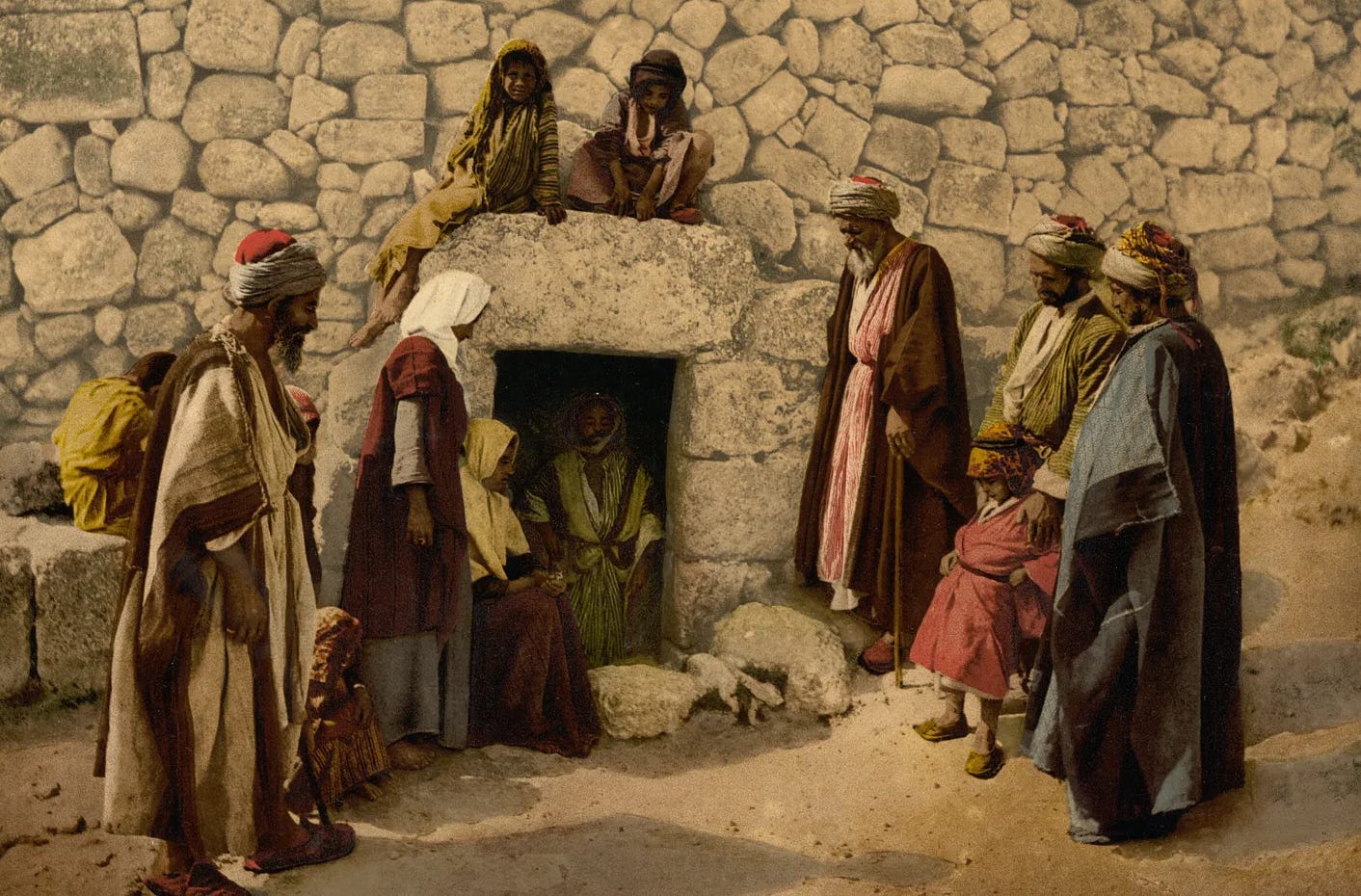
Further, Lazarus wasn’t the only dead body buried in that cemetery. Yet Jesus walked in and only called out the name of the one he chose, and left the others in their graves. Could anyone say Jesus was being unjust for only choosing to raise Lazarus, and not the others? Of course not. Jesus raised Lazarus because it was his good pleasure to do so as an act of grace towards him. No one in that graveyard deserved to be raised, and the fact that Jesus raised Lazarus highlights both his grace and his sovereign choice, not to mention his power and authority over death. The others remained in their graves, which is exactly what their sins deserved.
It’s the same with salvation. The only reason anyone becomes a Christian is because the Holy Spirit regenerated them, gave them a new heart, and produced faith in them which wasn’t there before. Every Christian is like Lazarus in the sense that we were spiritually dead in our sins. Yet when we heard the gospel message, the Holy Spirit cried into our hearts, “come forth!,” and we believed. Not because we were smarter than those who do not believe, but because God chose us to produce faith in us.
God doesn’t do this for everyone. He does it for those he has chosen. That is what election means. And Paul’s argument is that this is not injustice. Every condemned sinner receives what his sins deserve. The ones who receive mercy receive something they did not deserve, made possible by the blood of Christ.
This is also not merely Paul’s doctrine. Jesus taught it himself. In John 13:18, he said plainly, “I know whom I have chosen.” Election is not a Reformation invention or a Calvinist hobby horse. It runs through the teaching of Jesus. In fact, it is taught in the Old Testament times in the book of Exodus.
Two Examples: Moses and Pharaoh
Paul demonstrates this doctrine from the lives of Pharaoh and Moses. Paul says, “so then he has mercy on whomever he wills, and he hardens whomever he wills” (Rom 9:18).
Moses was not an innocent man. He was a murderer. And yet God chose to show him mercy. The decision, as Paul makes clear by quoting Exodus 33:19, was entirely God’s: “I will have mercy on whom I have mercy, and I will have compassion on whom I have compassion.” Nobody on earth deserved that mercy. It was God’s sovereign good pleasure to show it. The mercy Moses received came entirely from God’s initiative, not from anything commendable in Moses himself.
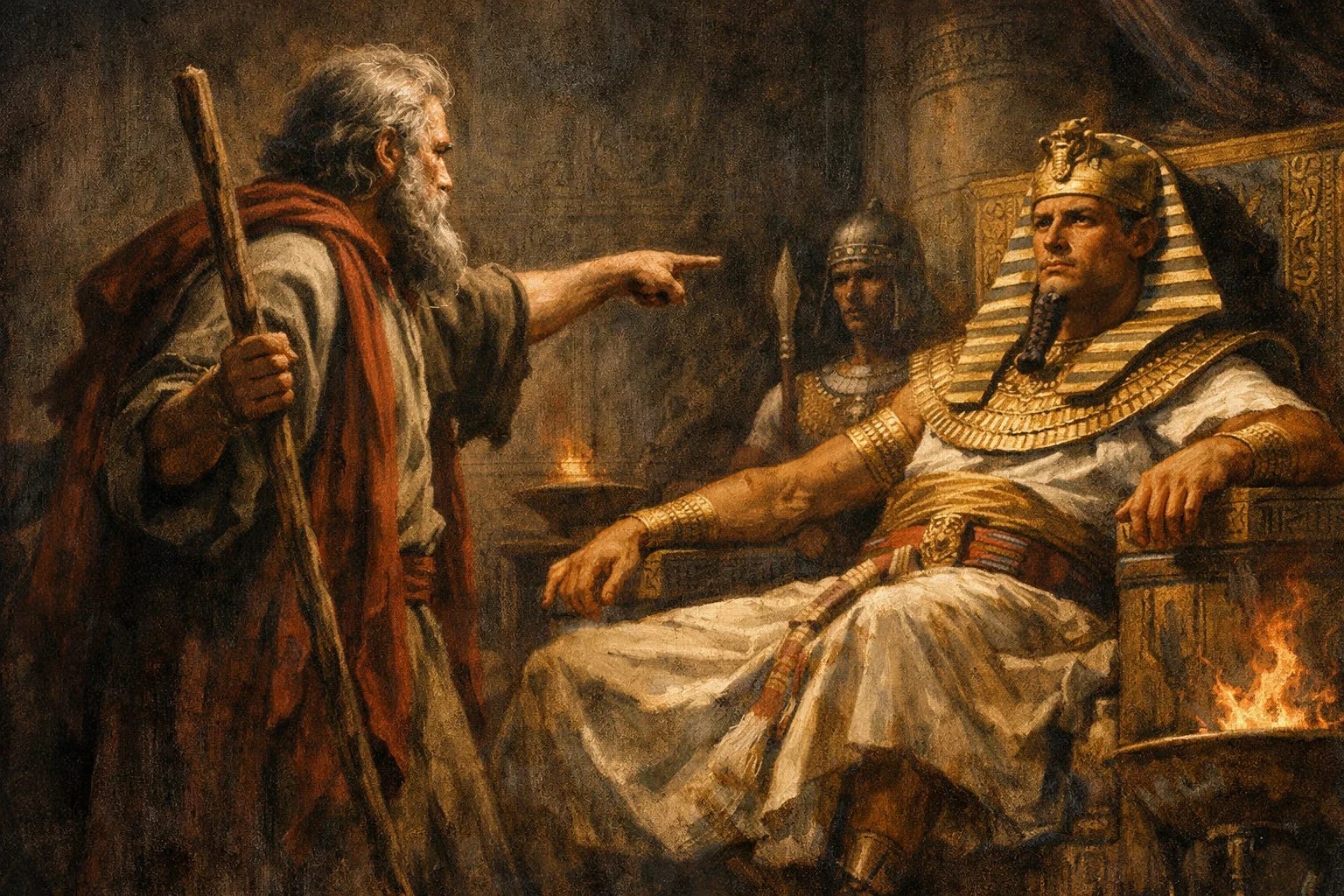
Pharaoh is the counterpoint. God raised Pharaoh up to become the most powerful man in the ancient world. That power was itself a gift. And Pharaoh used it to defy God repeatedly, hardening his heart against every sign and every warning Moses brought him.
The phrase, “he hardens whomever he wills” is often misunderstood, because it sounds like God created fresh sin in Pharaoh’s heart, as though he were an innocent man and God put sin there that wasn’t already there. That’s false.
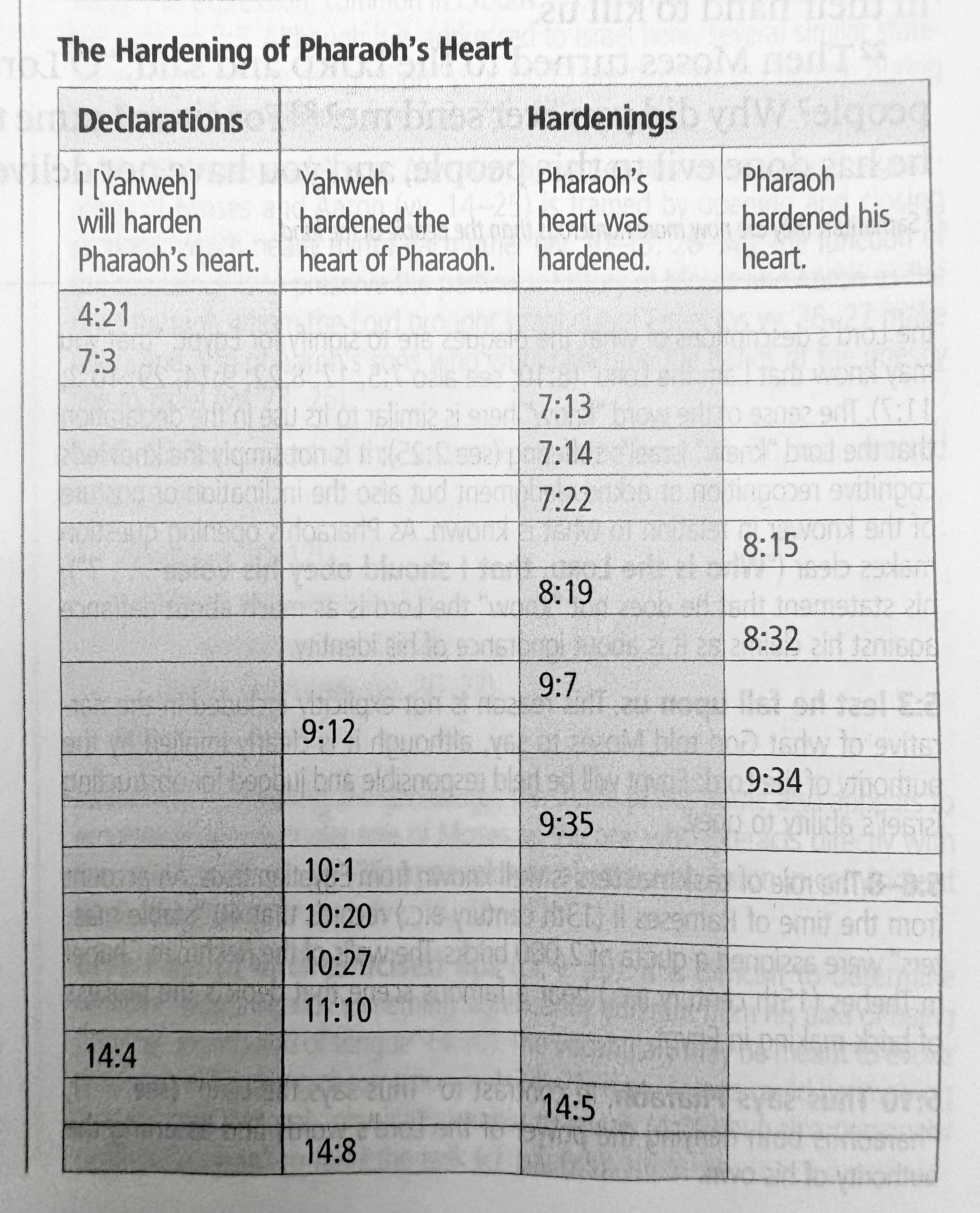
The book of Exodus describes the hardening of Pharaoh’s heart in three ways: (1) Pharaoh hardened his own heart, (2) Pharaoh’s heart was hardened, and (3) God hardened Pharaoh’s heart. From these descriptions, you can see that Pharaoh was already in active rebellion against God, and God raised him up and used his sin to accomplish God’s purposes. In other words, these are not three separate events describing the same divine action. They describe an escalating sequence in which Pharaoh’s active, deliberate rebellion precedes God’s judicial response.
The doctrine of election does teach that God chooses who will be saved and who will not be saved. But God’s choice in either case is not symmetrical. We should not think of God’s sovereign choice as though he were dealing with an innocent human race, whereby God creates evil in the hearts of the non-elect in order to punish them. God forbid!
Rather, we must assume a fallen, wicked, sinful human race whereby God regenerates the elect and creates faith in them unto salvation, but leaves the wicked to suffer the consequences of their own wickedness. For the elect, God takes action to produce something good in them they didn’t already possess. For the non-elect, God passes over them and does not do the same for them.
We must understand that man is not as sinful as he could be. The only reason why man is not even more wicked than we are is that God, by his common grace, restrains us from what we might otherwise have done. In this way, when God “hardened” the heart of Pharaoh, he was simply removing his hand of restraint that was holding back the wicked darkness that was already at work in his heart. God did not force Pharaoh to sin. God stopped restraining him.
This is the same pattern Paul describes in Romans 1, where God’s judgment on persistent sin is to give people up to even greater sin:
“Therefore God gave them up in the lusts of their hearts to impurity, to the dishonoring of their bodies among themselves…” (Rom 1:24)
“For this reason God gave them up to dishonorable passions. For their women exchanged natural relations for those that are contrary to nature…” (Rom 1:26)
“And since they did not see fit to acknowledge God, God gave them up to a debased mind to do what ought not to be done” (Rom 1:28).
In each of the cases described in Romans 1, God was not causing people to sin, God was judiciously giving people over to the consequences of their sin, which is more and greater sin.
Therefore, Pharaoh’s hardening was his own doing. But God’s hardening of Pharaoh was not the same as Pharaoh’s self-hardening. God’s hardening was merely the removal of what had been holding Pharaoh back from the full expression of what he already was.
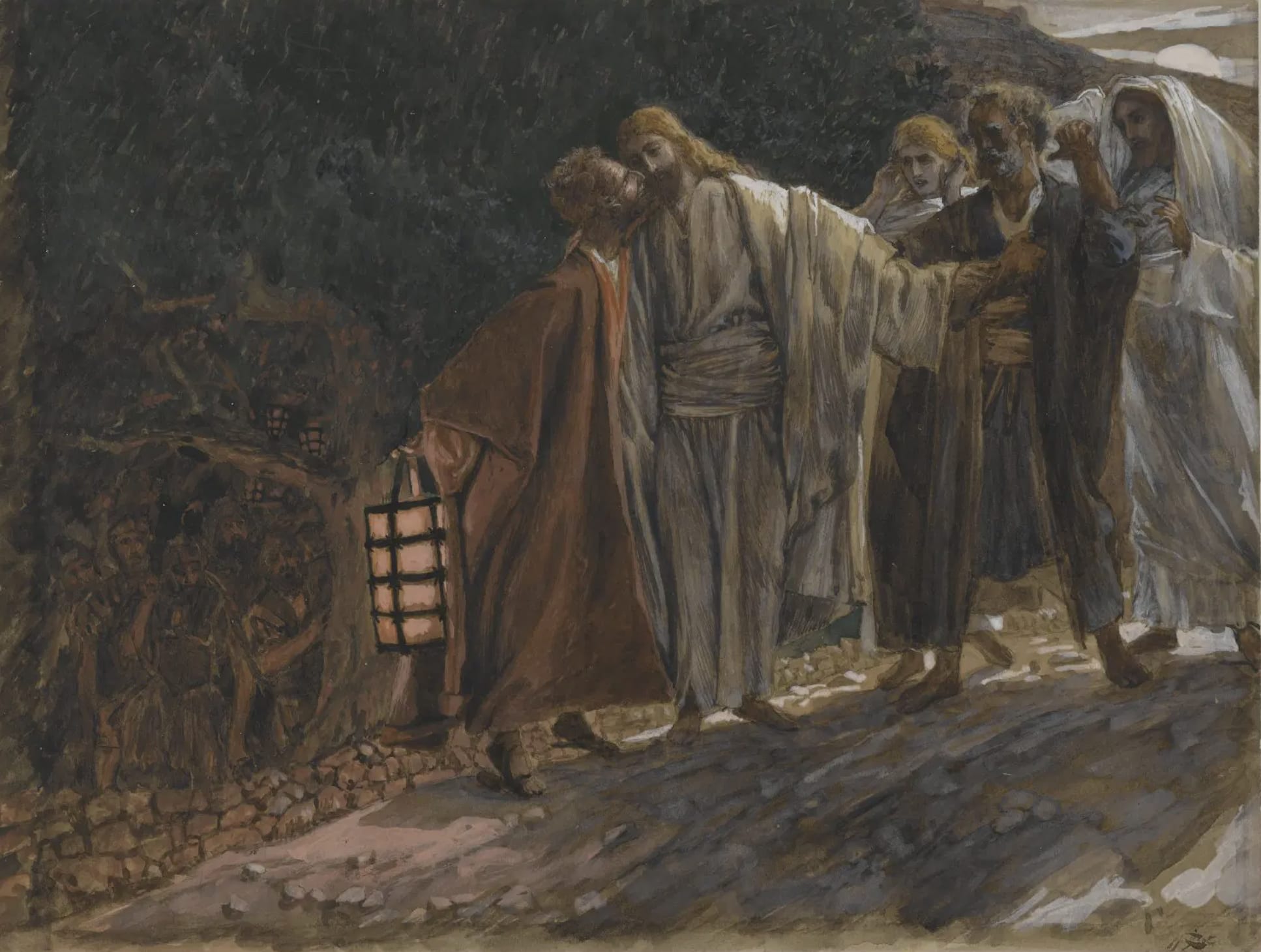
The same principle applies to Judas Iscariot. Jesus did not create fresh betrayal in Judas’s heart. No, Judas was already a thief and a corrupt man. He wanted power and money, and he betrayed Jesus to get them. And yet God used that treacherous act to bring about the redemption of the world. Just as God raised up Pharaoh to bring about a glorious purpose in Exodus, God raised up Judas to bring about the cross of Christ, which has brought salvation to God’s people. What Judas meant for evil, God meant for good.
The Wonder Is That Anyone Is Saved
So, back to the question of God’s justice in election, we can see that justice is exactly what Pharaoh received. Were it not for God’s common grace restraining us, we might have been just as hardened as he. Yet, for his own reasons, it was God’s good pleasure to show mercy to us, electing us, regenerating us, and creating saving faith in our hearts.
God has mercy on whom he has mercy. God has compassion on whom he has compassion. For those who receive this gift, it should humble us like no other doctrine in scripture.
Personally, when I think about it, I can’t get over it. I could have been lost and under God’s judgment. I could have been like Pharaoh, or even worse! The only thing preventing me from being the most vile and despicable man is the sovereign grace of God that sought me, bought me, and made me new.
Since the doctrine of election isn’t easy to understand or embrace, those who believe it can sometimes feel intellectually superior, as though they are smarter than other people who reject it. That is the opposite of what it should produce in us.
The doctrine of election should humble us, because it teaches that there is absolutely nothing in us that makes us more lovely or appealing candidates for election. We’re not smarter, better, more noble or virtuous, or superior to the non-elect in any way. The only difference between us and the non-elect is simply God’s sovereign choice.
I suppose we’ll spend the rest of eternity humbly and gratefully basking in the fact that God chose us, and there won’t be a millisecond in all of eternity where we will boast in ourselves for making the right choice. The wonder is not that some people are damned. The wonder is that any of us are saved. To God be the glory!
If you’d like to hear more on this doctrine, see here for a sermon I preached on it recently.
Great job explaining election. I loved your comparison to Jesus only raising Lazarus from the dead.
While I respect your viewpoint, I will never be a Calvinist and hold to this viewpoint. Predestination and election are profound theological ideas that I believe lies beyond our very finite minds. In the end I want everyone to hear the Gospel of Jesus Christ. What happens between God and the hearer is God’s work in cooperation with the will of man. But always by grace and not of man’s effort or works.