

Isaiah saw it coming 700 years before it happened. He described a mountain, a feast, and death swallowed whole. Most Christians know the resurrection as a historical event. Isaiah presents it as a cosmic event. Understanding it as a cosmic event shows the power and beauty of Christ’s resurrection more fully.
The section of Isaiah known as the “Isaiah Apocalypse” runs from chapters 24 through 27. It opens with total devastation. Chapter 24 is not subtle. The earth is laid waste, its foundations are shaken, the heavens are undone — it’s judgment on a breathtakingly dreadful scale.
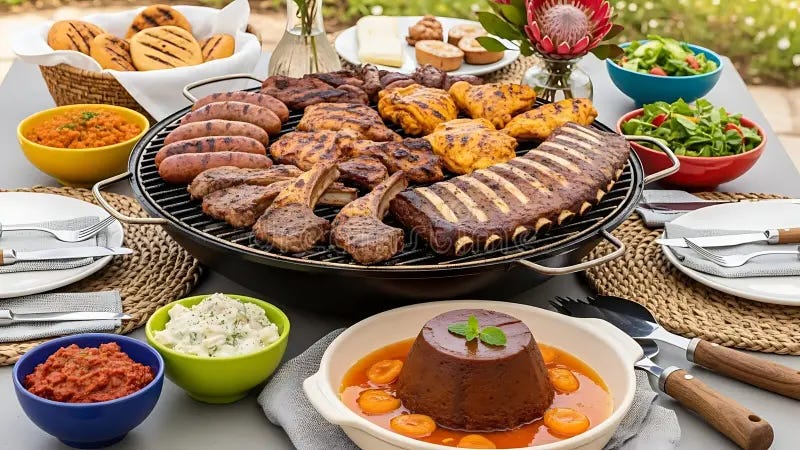
Then chapter 25 opens with praise. Verses 6–9 describe what follows the devastation: a feast, on a mountain, for all peoples, where God himself swallows up death forever. The emotional arc runs from devastation to celebration. That arc should sound familiar, because it’s the same arc of Jesus Christ. The cross was judgment. The resurrection is the party after the war.
But Isaiah isn’t merely describing what happened to Jesus. He’s describing what will happen to everything. The whole created order will follow the same pattern as its Lord — death, then life, judgment, then feast.
Put another way, Isaiah 24–25 is the Easter story of the cosmos.
The feast takes place on a mountain, which Isaiah specifies deliberately. In the Old Testament, mountains are where heaven and earth meet, where God shows up. Abraham nearly offered Isaac on a mountain. Moses received the law on a mountain. The temple was built on a mountain, Jesus was transfigured, crucified, and ascended from mountains. The Bible’s most consequential moments happen at high elevation. That’s not incidental geography — it’s the Bible’s way of saying the boundary between the divine and human is thin up there.
The mountain Isaiah has in mind is Mount Zion, the hill in Jerusalem where the temple stood, established as the setting in 24:23 where the LORD of hosts reigns on Zion immediately before the feast scene begins. But Zion carries far more weight than its coordinates. Isaiah returns to this mountain throughout his book. It is one of the controlling images of his whole prophecy. In chapter 2, at the very beginning, he describes Zion as the highest of all mountains, with nations streaming toward it from every direction. In chapter 65, at the very end, the wolf and lamb graze together and nothing hurts or destroys “in all my holy mountain.” The same image anchors the opening and the closing of the book, and it grows in significance each time it appears. By the time we reach chapter 25, this is not merely a hill in Jerusalem. It is the place where God meets the world, where the whole human story reaches its apex and proper end.
Zion has always held both mercy and judgment in tension. The sacrificial system operated there, which included the entire machinery of sin, guilt, and atonement. Blood was shed constantly at this mountain, precisely because this is where God’s holiness was most concentrated. Yet at the same time, the psalmists sang about Zion as a city that cannot be shaken, a place of refuge where God defeats his enemies and shelters his people. Judgment and salvation have always met on that mountain.
About a quarter mile away stood another hill called Golgotha, the place of the skull, where Jesus was crucified. Close enough that the temple complex was almost certainly visible from the cross. The people who watched Christ die on the cross could see the house of God in the background. Calvary is the place where Zion’s two functions finally and decisively converged — the judgment fell on God’s Son, and the salvation went to everyone who looks at him in faith.
The central verb in Isaiah 25:6–9 is the Hebrew word bala’ — to swallow. God uses it twice. First he swallows up the covering cast over all peoples, the veil of blindness and death that drapes the whole human race without exception. Then, more dramatically, he swallows up death itself, permanently.
Death is the great swallower — Isaiah 5:14 uses the same verb for Sheol, a hungry mouth that takes everything and gives nothing back. The whole world lives under something that devours without limit, that no one escapes, that renders every human achievement temporary and every human joy provisional. God’s answer to that is not to comfort us in the face of death or help us make peace with it. His answer is to out-swallow it. He takes the thing that consumed everything and consumes it. In other words, the predator gets eaten.
Paul knew exactly what Isaiah was doing. When he arrives at the climax of his resurrection argument in 1 Corinthians 15, he quotes Isaiah 25:8 directly — “Death is swallowed up in victory. O death, where is your victory? O death, where is your sting?” — not as a poetic flourish but as a fulfillment claim. The tomb is empty because Isaiah 25:8 had to come true. John says the same thing in Revelation 21, where the voice from the throne promises that God will wipe away every tear, that death shall be no more, that mourning and crying and pain are finished. That is Isaiah’s feast. The mountain, the veil removed, the tears wiped away, the reproach lifted. John isn’t inventing new imagery. He’s telling his readers that the vision Isaiah saw has arrived.
The feast itself is spread for all peoples and all nations, not just Israel, which was always the point. The God of Israel was never merely the God of one people. He chose a particular people as the means through whom he would reach everyone else, and the mountain that began in chapter 2 with nations streaming toward it ends in chapter 25 with those nations sitting at the table eating the finest food and drinking the best wine. The last verse captures the mood: “Behold, this is our God; we have waited for him, that he might save us.” Nobody at that table will be comparing their spiritual résumés. There is only the recognition that God did what only God could do, and the only appropriate response to that is joy.
That joy has already broken into history. The resurrection of Jesus Christ is the down payment on everything Isaiah described — the feast has started, even if the main course is still coming. Every time the church gathers, every baptism, every Lord’s Supper, we are tasting what Isaiah saw. The guests are still arriving. But death has already lost.
Isaiah prophesied it in advance. We are living in it now.