

As we prepare to begin a new year, I wrote this article to give you confidence in your Bible with the hope that you’ll commit to reading the whole thing next year. This piece was originally published by the Center for Baptist Leadership.
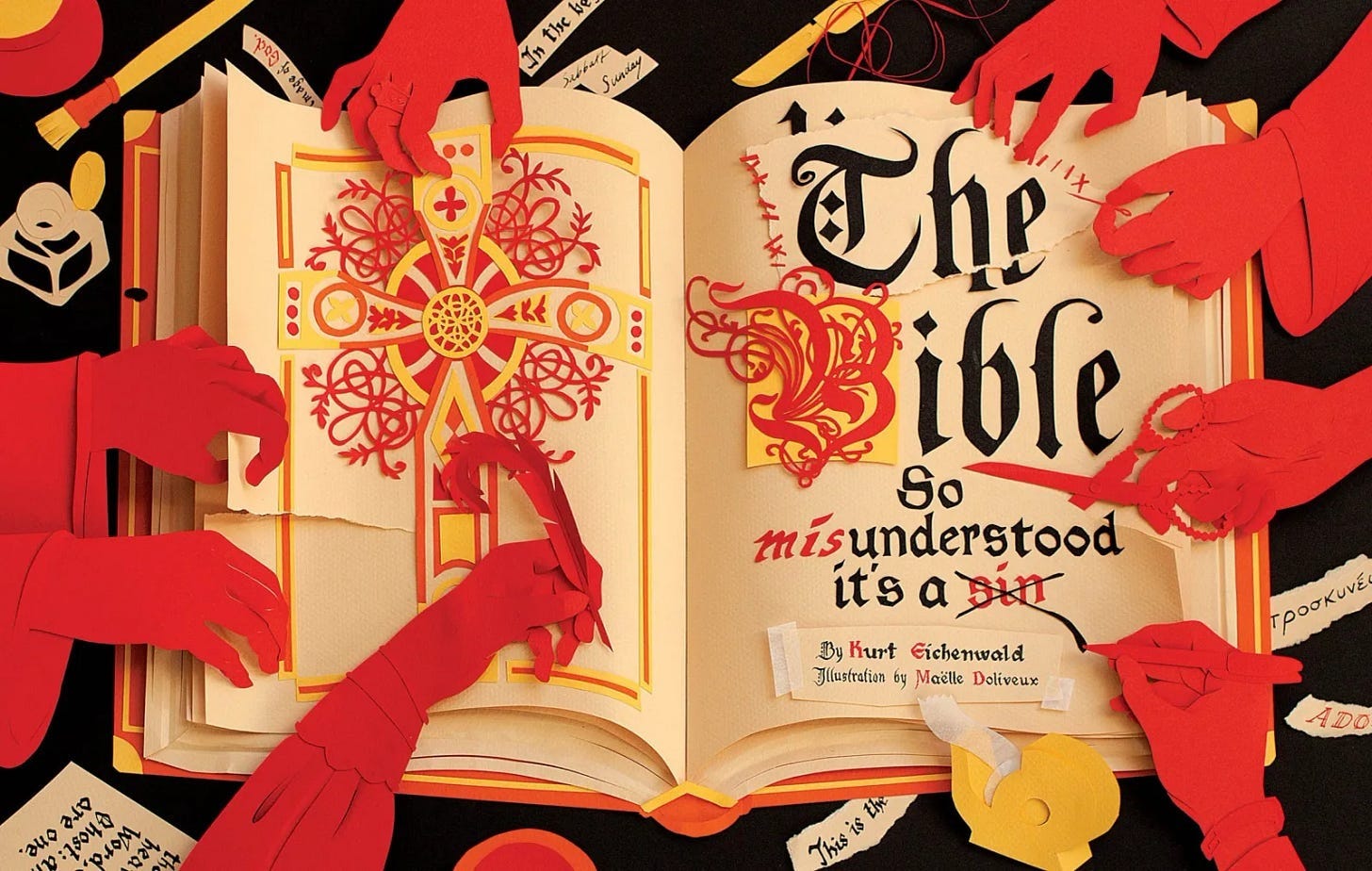
Every few years, a new variant of an old, poisonous theme emerges about why the Bible is unreliable and untrustworthy. One of these from Newsweek caught my attention a few years ago. It was entitled, “The Bible: So Misunderstood It’s a Sin.” The cover art for the article featured a Bible stitched together by several bright red, demon-like hands.
The article goes on to report several thoroughly debunked anti-Christian claims.
Here’s a sample: The Bible is “a fundamentally flawed document. Errors and revisions by copyists had been written in by the fifth century, and several books of the New Testament, including some attributed to Paul, are now considered forgeries perpetrated by famous figures in Christianity to bolster their theological arguments. It is small wonder, then, that there are so many contradictions in the New Testament. Some of those contradictions are trivial, but some create huge problems for evangelicals insisting they are living by the word of God.”
In other words, you can’t trust the Bible. It’s not God’s word. It’s the word of man pretending to be God’s word.
The article is embarrassingly inaccurate in its details, but accuracy was not its goal. You have to realize, Newsweek isn’t reporting a story; they’re preaching a sermon. Their un-subtle agenda is to undermine Christianity in the guise of journalism and intimidate believers into doubting their faith.
In this article, my goal is to briefly construct a theology of scripture that can give you confidence in the Bible. I also hope this will encourage you to get to know the Bible for yourself by committing to reading through it next year.
So the question at hand is this: Can you trust the Bible? To answer this question, I’ll make six points and answer two objections.
1. God Reveals Himself Through Words
When you open Scripture, you see from the opening verses that God is a talking God. He creates by speaking. Don’t underestimate the importance of that fact. This shows that God is knowable and takes the initiative to make himself known. God’s ultimate self-disclosure is Jesus Christ, the Word made flesh (John 1:1-5, 14). But even then, everything we know about Christ is given to us in written words.
Words are the currency of relationships. God reveals himself in words and sentences and paragraphs and books. We are created in the image of God, and we likewise relate to one another with words, the way God relates to us. Without words, there is no clarity, no trust, no knowledge of the other person. That’s why silence from God would mean darkness for us. We can’t access the mind of God apart from God’s decision to reveal Himself.
Without revelation, we’re left with speculation, and speculation is just guessing. A lot of people will tell you what God is like, or what God thinks about this or that, but if they say these things without demonstrating it from scripture, they’re just guessing. God does not allow that. We’re not permitted to pontificate about God without a textual warrant.
Incidentally, Satan’s first recorded words in the Bible are an attack on God’s word: “Did God really say?” From the beginning, Satan’s primary tactic is to attack the word of God. Newsweek is amplifying Satan’s chief line of attack against God. Satan sounds like he could have been a staff writer for Newsweek.
2. God Has Revealed Himself in the Bible
The secular view is that the Bible is a human book, where men pontificate, or “guess,” about God. The biblical view is that the Bible is a divine book in which God, the Creator, discloses Himself to us, His creatures. The Bible isn’t the record of ancient people reaching upward toward God; it is the record of God reaching downward toward us. The theological word for this is revelation.
Peter says, “No prophecy of Scripture comes from someone’s own interpretation… but men spoke from God as they were carried along by the Holy Spirit” (2 Pet. 1:20–21). This means every passage of Scripture has two authors: a divine Author, who revealed himself to the mind of the writer, and the human authors, who wrote down what God revealed to them. This does not mean “dictation.” That’s a caricature of revelation. The voice and personality of the human writers are preserved as they wrote under the inspiration of the Holy Spirit.
3. The Bible Is the Inspired Word of God
As revelation is the mind of God being revealed to the human author, inspiration is the mind of the author to the page of Scripture. What they wrote is exactly what God intended them to write. Paul says, “All Scripture is breathed out by God…” (2 Tim. 3:16).
Theologians use three words to make this more specific: (1) verbal, (2)plenary, and (3) inspiration. “Verbal” means the words themselves are inspired—not just the concepts, ideas, and ethical categories—but the words of the text itself. “Plenary” means all the words. Every single word in the Bible is inspired by God. “Inspired” means breathed out by God. The Holy Spirit carried along the biblical authors such that the words they wrote down perfectly reflect what God wanted them to say.
Inspiration does not mean the biblical authors got “inspired” one day and then wrote the Bible. Paul didn’t go outside, look at a pretty sunset, get “inspired,” and write the book of Romans. Also, inspiration does not mean that the authors themselves are perfect. The human authors were flawed and sinful, just like we are. They needed grace, just like we do. And yet God used imperfect men to communicate his perfect truth.
Jesus himself affirmed this when he said, “Not an iota, not a dot, will pass from the Law until all is accomplished” (Matt 5:18). Jesus affirmed the inspiration of scripture down to the most minor marks of Hebrew punctuation. Similarly, Paul built a theological argument in Galatians on the difference between whether the word “seed” was singular or plural (Gal 3:16). Scripture is that precise.
The doctrine of verbal, plenary inspiration is vital because liberal scholars will tell you, “the Bible itself is not God’s word; rather, the Bible contains God’s word.” In other words, God’s word is the impression someone gets while reading the Bible, but the Bible itself is not God’s word. That view is incorrect. The actual words of scripture are inspired by God, which means the Bible itself is the word of God.
4. The Bible Is Sufficient for Salvation and Christian Living
Since God inspired every word of the Bible, it is therefore sufficient to give us all we need to know how to be saved and fully obey Christ. God did not leave anything out. He did not forget anything. If it is not in there, you do not need it. If it is in there, you absolutely need it. Therefore, God forbids us to add to it or subtract from it. Deuteronomy 12:32 says, “Everything that I command you, you shall be careful to do. You shall not add to it or take from it” (cf Deut 4:2, Rev 22:18-19).
Someone might object, saying, “The Bible was being added to over the course of 2000 years. How can God say we can’t add to it?” The Bible was not revealed all at once. God revealed himself to his people “at many times and in many ways… by the prophets” (Heb 1:1). When God acted in history, he authenticated his word to the prophets through miraculous signs. If someone were a false prophet, God commanded them to be executed. So there were great consequences for adding or taking away from God’s word.
Thus, God gave his people what was needed at each stage of redemptive history leading up to the time of Christ, who is the final revelation of God. In Jesus Christ, God revealed himself completely and fully by his incarnation, the “word made flesh” (John 1:14). The Word of God became man and dwelt among us. This means Jesus Christ is the fullest and finest self-disclosure of God.
Christ lived a perfect life. The reliable, historical account of his life and his teachings is recorded in the gospels. He died on the cross for our sins, rose again on the third day, and ascended to be with the Father. Now that Christ has fully accomplished everything necessary for our salvation, there is no need for any further revelation. What more could God say? What more is there to say? Salvation is accomplished, redemption is done. We know everything that we need to know to be saved and to live a Christian life. To add to the Bible is to imply that God didn’t say enough in Jesus Christ. That is an insult to God. Jesus Christ, the Son of God, is the final word. Nothing can be taken away. Nothing new can be added. There is nothing more to say.
5. The Holy Spirit Illuminates the Word of God to the Mind and Heart of the Reader
The doctrine of illumination teaches that the Holy Spirit opens the mind and heart of God to the reader. On the road to Emmaus, the disciples said, “Did not our hearts burn within us while he talked to us on the road, while he opened to us the Scriptures?” (Luke 24:32). Since the Holy Spirit “inspired” the Scriptures, we depend on the Holy Spirit to understand it. That doesn’t mean Scripture is obscure; it means our hearts are. Sin and pride darken the mind and heart. But the same Spirit who inspired the Word now shines light on the Word so that we grasp it rightly. Illumination means God turns on the lights of our hearts through the reading, teaching, and preaching of his word (cf 2 Cor 4:4-6).
Hebrews 4:12-13 says, “the word of God is living and active, sharper than any two-edged sword, piercing to the division of soul and of spirit, of joints and of marrow, and discerning the thoughts and intentions of the heart. And no creature is hidden from his sight, but all are naked and exposed to the eyes of him to whom we must give account.”
The Holy Spirit and the Scriptures work in tandem. The Holy Spirit wrote the Bible, and the Holy Spirit lives within the heart of every believer. God helps us understand and obey him better through regular exposure to God’s word. Scripture is like kindling that the Spirit of God sets on fire in your heart. The more scripture you have in your heart, the more kindling there is to burn.
God’s word is living and active. It is not a dead book. It is sharp like a sword. The Bible will cut you open; it will slice you down to the bone, through the muscles and the sinews, down to the marrow. And as you read the Bible, the Bible reads you. You cannot hide from it. It lays you bare, naked, exposed.
Reading the Bible is like looking into the mirror of God. God says, “This is you.” It exposes hidden heart motives; it reveals all kinds of things that we are uncomfortable with. We do not want to be read that way. We do not want to be exposed that way. We feel ashamed. We feel embarrassed. That is why we do not want to hear the word of God. We do not like the discomfort that the word of God brings us. And this is precisely the discomfort we need.
Illumination does not mean new revelation. The Spirit is not adding fresh content. He is enabling us to see what is already in the text—what God has already spoken. When a Christian reads Scripture and feels conviction, clarity, encouragement, or a sudden realization of truth, that is the Spirit of God opening the eyes of the heart.
6. The Canon of Scripture Is the Complete Word of God
God revealed Himself progressively through redemptive history, never leaving His people without the words they needed. The word canon refers to the list of books that belong in the Bible.
By the time of Christ, the Old Testament canon was unofficially settled. Jesus himself referred to the three sections of the Old Testament that were universally acknowledged as scripture at that time, saying, “everything written about me in the Law of Moses and the Prophets and the Psalms must be fulfilled” (Luke 24:44-45). The Law, the Prophets, and the Psalms (or “the writings”) contained all that we now know as the Old Testament.
Jesus handpicked twelve disciples, whom he appointed as apostles, and gave them authority to serve as eyewitnesses to the resurrection. Thus, Jesus himself commissioned what we now know as the New Testament. Every book of the New Testament was either (1) written by one of the twelve apostles or (2) authorized by one of the apostles.
Therefore, Jesus is Lord over the whole canon of scripture. He is the final and fullest revelation of God. He personally affirmed the entire Old Testament canon, even down to the punctuation marks. He personally commissioned the New Testament canon by appointing the apostles who wrote or authorized the writing of those books. Now that our redemption has been accomplished, the gospel is now fully revealed, and the apostles recorded the life and teachings of Christ.
Upon the death of the apostles, the apostolic age ended, and the canon is now closed. Sixty-six books, Old and New Testaments, no further revelation is needed. God has spoken. Christ is the final Word. The Bible is complete. (cf Rev 22:18-19).
Dispensing with Two Objections to the Trustworthiness of Scripture
In my years of pastoring, I’ve heard two main objections raised against the reliability and trustworthiness of Scripture. I want to bring those up here and respond to them each in turn.
First, I hear people say, “How can the Bible be true when there are so many errors and contradictions in it?“
There are two ways the Bible can “contradict” itself, but neither of which is an actual contradiction.
First, you can have parallel accounts of the same event that report conflicting information. For example, Matthew, Mark, Luke, and John all give eyewitness accounts of the life of Jesus, but differ in some of the details. In the resurrection accounts, Matthew says the women encountered one angel, Mark says one man, Luke says two men, and John says two angels.
Skeptics see these as contradictions, but we should not expect the Bible to report information that modern journalists would. These are not contradictions but complementary accounts that can be harmonized, with each author reporting information that suited their purposes. The simplest way to harmonize this account is this: two angels appeared at the empty tomb in the form of men.
The second way the Bible can contradict itself is when theological statements seem to contradict each other. This is not a problem when we recognize that God’s word often teaches us through paradox. God affirms things that seem to contradict but do not actually contradict. For example, in Exodus, Pharaoh is sometimes said to harden his own heart, and at other times it says that God hardened his heart. Which is it? The answer is both. That’s not a contradiction, that’s a paradox, and by affirming both realities, Scripture teaches us about the intersection of God’s sovereignty and man’s agency.
This is necessary to a degree. Scripture is teaching the eternal mind of God; there will certainly be things too high and lofty for us to fully comprehend, but that doesn’t make them untrue. Though scripture teaches paradoxical things, there is no actual contradiction. Deuteronomy 29:29 says, “The secret things belong to the Lord our God, but the things that are revealed belong to us and to our children forever, that we may do all the words of this law.”
Second, I’ve heard many other people say, “How can the Bible be true when we don’t even have the original copies?”
Here’s how the Newsweek article put it: “At best, we’ve all read a bad translation, a translation of translations of translations of hand-copied copies of copies of copies of copies of copies, and on and on hundreds of times.”
Basically, it’s saying you think the Bible is the word of God, but really, it’s just a really elaborate telephone game that has got the weight of divine authority behind it. This statement is laughably untrue. Every modern Bible is translated directly from the original manuscripts of Hebrew and Greek. And the sheer multiplicity of manuscript copies is a good thing because it serves as an authenticating feature. In fact, the more copies of ancient manuscripts we have, the easier it is to know what the original was.
The early church was a period of rapid expansion, and copies of the biblical writings needed to be circulated to instruct new believers. So there was an urgency to make copies of the Bible so it could be distributed far and wide. Thus, we now have early manuscripts from all over the ancient world, and their volume is astounding compared to other ancient texts. This can give us greater confidence in the original’s accuracy, especially since believers took scripture’s wordsvery seriously and were committed to maintaining accuracy.
When you compare different manuscripts to one another, you do find a few discrepancies. Does that mean there are errors in the Bible and you can’t trust it? Of course not. The more manuscripts you have, the easier it is to compare them to one another to determine the original reading. There are an estimated 5800+ Greek NT manuscripts, plus thousands more manuscripts in other languages.
Consider this example. Suppose Nicholas Cage actually did steal the original Declaration of Independence, accidentally dropped it into the Potomac, and destroyed it. Does that mean we no longer live in a constitutional republic, and America has to be annexed back into Mother England? Of course not, because you can find several copies at any decent elementary school. But what if there’s an error in one of them? That’s not a problem, because you can gather up several copies from different places, compare them to one another, and identify the error. The multiplicity of copies is to our great benefit. It gives us even greater confidence in their accuracy.
Did you know that 99.5% of the New Testament is considered certain? That leaves 0.5% of the NT where there’s some discrepancy in the manuscripts. When there is a discrepancy, most of those are easily resolved. Most are very obvious, such as misspelled words, duplicated or omitted words, or transposed words, like “Jesus Christ” versus “Christ Jesus.”
The issues that remain after that add up to roughly 700 words in about 50 passages, none of which affect a significant point of doctrine (for comparison, this essay is about 3400 words). The discrepancies are tiny and relatively insignificant, such as an uncertain place name or the number of deaths in a battle.
Biblical scholars have compiled all the best manuscript evidence and scholarly research into two books: a Hebrew edition of the Old Testament and a Greek edition of the New Testament. Now, every Bible translation in every language on earth has been translated from the original Hebrew Bible and the original Greek Bible. It’s not a game of telephone. The Bible has been translated into around 776 languages, all from the original Hebrew and Greek. The New Testament has been translated into nearly 1,800 languages, all from the original Greek manuscripts. All told, at least some part of the Bible has been translated into about 4,000 languages.
Conclusion
The bottom line is this. You can trust your Bible. It’s rock solid. The Bible is not fragile. It is not ambiguous. It is not the product of scheming men stitching together a tool of oppression. It is the voice of God in human words, clear enough for the simple and deep enough for the scholar.
God is knowable and wants to be known, and God ordinarily reveals himself through words, sentences, paragraphs, and books. This is the Bible. The Bible has two authors: a divine author and the human authors. God inspired the biblical authors to write the words of scripture, and every word in the Bible is breathed out by God and is without error. God canonized his word in the 66 books of the Bible, with Jesus affirming the OT canon and commissioning the writing of the NT canon. And when you read the Bible for yourself, God illuminates his word to you, helping you see him and know him, so you might worship and obey him.
This essay was adapted from a sermon preached on December 7th, 2025, at Christ the King Church in Fort Thomas, Kentucky.
Hi Michael,
That was a good summary of the classic Reformation position. And quite readable. But you might have noticed as you were writing that it is full of assertions, and thin on discounting other interpretations.
Let me say up front that I also accept the Bible as inspired. Not a doubt in my mind! But that maximum position to outlined is a house of cards. 'Inspiration' does not imply 'Dictation', as implied by 'every word' in a modern sense. The Bible is NOT an 'Instruction Manual' as has commonly been portrayed; it is much deeper than that; it is a 'Formation Manual', so we are inwardly formed into people with Godly wisdom instead of simplistic obedience.
The Bible was written by men who were inspired by God to convey His words to people of their time in the circumstances of their time. But that wasn't simply 'good advice'! No! they wrote so as to show the universal principles on which that Godly advice is based. It is the task of the pious exegete to show how those underlying principles should be applied by different people in different circumstances.
For example, I have been assailed by one atheist friend who can't let go of the assertion that St. Paul didn't condemn slavery. I responded by saying that St. Paul was never asked whether or not he approved of slavery; his writings were not a political manifesto, but advice to people who were either slaves themselves of slave -owners. Paul was advising them how to live in those circumstances. "Why didn't he tell the owners to set their slaves free?" I was challenged. Because a freed slave in Roman society had very few rights, and no capacity to bring a case to court ; only citizens could do that. So instead of recommending manumission, Paul's advice was to treat slaves not as property, but as members of the family. Read Philemon!
This has implications far beyond the immediate circumstance. It implies how employee-employer relationships should be framed, and even to other power imbalances in society. All humans owe respect to all other humans, in whatever social structures they are framed. Thus Paul goes much deeper than merely condemning one social structure at one point in history.
Similarly the status of women. Paul wrote in several places that women should be submissive towards their husbands in public. Is this an eternal rule? Not really; Paul repeatedly says that women are to be loved by their husbands as a man loves his own body; that a man is to give himself as Christ gave himself. The hint is the social context. A woman who was disrespectful in public would bring shame upon her husband. So Paul asks the woman to be submissive. Note that he DOESN'T tell the husband to 'control your unruly wife!" It is the woman's gift to submit, not the husband's right to enforce it.
But in the home, out of public gaze, she is his equal and he would do well to treat her a such. Paul even uses the Greek word meaning 'Make a SON of' when describing the adoption of a woman into Christ; she has the same status as a man. But just as Paul didn't insist on all his rights, he urges women not to insist on all of their rights in public, for the sake of the Name.
So is the Bible inspired? You betcha! It is inspired to a deeper level than literalists can understand.